Showing posts with label Manipur. Show all posts

The Close Door Suffer : The Untold Story


By: CJ Biakmuan:

I met an young girl in Delhi , who worked as a maid. she was from  my hometown  (lamka).I had a conversation with her ...Like many other young girls who work as a maid in Delhi, A young and bright student has to drop her study due to financial constraint in her family and become a maid in Delhi with the hope to help her family, Her employer (A omnapa) were none other coming from same community and same town,   She never thought her a Aomnapa will have the intention to abuse her , as Aomnapa was a respectable man.

Things turn really nasty  for her one day while Aomnapa wife was away..  Usually Aomnapa used to jogged in the morning, He told her Step on ma back (back massage !) as i was tired, She was feeling uncomfortable then, After shw went back to her room, unnoticed she was follow by her  Aomnapa in to her room ,then she asked what is it ? what do you want..? then Aomnapa turn off the light and hold her hand, then she asked Aomnapa to leave her room,, Aomnapa replied 'do you think i will be doing something to you?  {bang hon chih di hon sa e } ', then Aomnapa leave the room,,
As when Aomnapa wife came home she was about to tell her but she was along with her colleague so no chance by now,,

As day goes by  Aomnapa wife had to leave for hometown , This time it was Aomnapa  child's birthday night as they sleep late night and his wife was away.. She sleep with the baby, but in the middle of the night the baby cry over again and again, then she gave it to Aomnapa .. the baby was fall asleep soon so she was, then she felt some body hand touching her, it was  Aomnapa hand she was full awake by now.. She struggle Aomnapa, shout and shout and no one was there for her. . when she find the opportunity she rush toward bathroom and lock herself in the whole night untill around 9 am in the morning when their Child awake..

As soon as she can contact her Parents back-home, relatives in Delhi brought out.
Although she was safe and sound by now her experience gave her Androphobia,
Personally i can't imagine to spent the whole night in a bathroom, crying the whole night alone,
This might not be the only incident but hope its the last one..


About the Author : CJ Biakmuan is a Delhi based freelance Blogger and can be contacted at  cjbiakmuan@gmail.com


Atrocities committed by the Assam Rifles

Report from Manipur 
Atrocities committed by the Assam Rifles 
Newsletter December 1989

Credit : tadar blog

While many national and international atrocities against women are reported in Indian newspapers, there is very little information about the situation of Naga women and men who are living in fear in the hills of Manipur. Under the guise of counter insurgency manoeuvres, the armed forces have acquired vast powers, specially under the Armed Forces (Special Powers) Act, 1958. This act as amended in 1972 gives extraordinary powers to the armed forces in “Disturbed Areas”; Some of these powers are: 


- To fire upon or otherwise use force, even to the extent of causing death, against any person who is acting in contravention of any law or order for the time being in force in the disturbed area. 


- Arrest without warrant, any person who has committed a cognizable offence or against whom a reasonable suspicion exists that he has committed or is about to commit a cognizable offence and may use such force as may be necessary to effect an arrest. 


- Enter and search without warrant any premises, to make any such arrest as aforesaid. 


- No prosecution, suit or other legal proceeding shall be instituted, except with the previous sanction of the Central Government, against any person in respect of anything done or purported to have been done in excess of powers conferred by the Act. 


Since 1956, the Naga Hills as a whole have been declared a ‘Disturbed Zone’. Protected by the provisions in law, the Indian forces have let loose a reign of terror. 


In 1956, Rev. Pelesato Chare was burnt alive by Indian forces in Phek district of Nagaland. In 1962, 12 men at Melikhu village were tortured and killed. In July 1971, four girls were tortured and raped inside the Gankeli Baptist Church. 


The tortures, rapes and murders have continued with regularity, culminating in 1987 in what has come to be known as the “Oinam Incident.” On the 9th of July 1987, at Oinam village in the Senapati district, the NSCN (National Socialist Council of Nagaland) raided the Assam Rifles camp and carried away arms. Instead of punishing the officers, who were responsible for the security of the camp, a counter operation codenamed, “Operation Blue Bird” was launched. 17 people were tortured and killed; 12 people including 6 babies died of starvation and lack of medical attention; more than 300 men and young boys were subjected to third degree methods. At least 10 women were raped or sexually molested by officers of the Assam Rifles. 


The Armed forces behaved like an invading enemy, looting indiscriminately, to the extent of stealing shawls, utensils, fish, cash and paddy etc. A Naga Civil Rights Organisation’s estimate shows that the Assam Rifles have looted more than Rs 50 lakhs worth of goods and cash in 7 villages. The Naga People’s Movement for Human Rights is now suing the Assam Rifles for, among other things, exemplary damages to be paid to the families of those tortured to death, to women who were assaulted or raped, and others who suffered at the hands of the Assam Rifles. 


REPORT FROM JUNE 1989 


Diary of an activist. In the first week of June 1989, a fact-finding team sited Ukhrul, Senapati and Tamanglong districts of Manipur. While a complete report will be available in a few weeks, some salient features are reported here. While murder, torture and rape continues, these atrocities draw attention to the daily terror and violence faced by innocent villagers. The presence of the Assam Rifles in many cases is breaking down the community organisation and disrupting the economic life of the village. 


- “After the Oinam incident in June 1987, the 21st. Assam Rifles came to the village and destroyed all the bridges across the river Barak so that we could not cross the river and tend to the paddy fields. We could not do the weeding operations or protect the fields from wild animals. Many families got only a small harvest which makes it very difficult for the family to survive. We could repair the bridges only after several months - after the monsoon was over.’ 


- “On 7th March 1989, attempted rape of Ms Ashiphro: An Assam rifles jawan, named lndra Bahadur came down from the camp and knocked on Ms Ashiphro’s door one night. She did not open the door because her husband was away at Imphal. The jawan started breaking down the door and when she tried to save the door by opening it, he tried to rape her. She raised a hue and cry at which he physically assaulted her and hit her on the head and legs. She was rescued by the villagers and had to be hospitalised for a week. Three months later, her leg was still giving her trouble. While Ms Ashiphro and her husband wanted to file a complaint in court, her father was forced by the Assam Rifles to make a compromise settlement. She was paid Rs. 1000 for immediate treatment. Long term effects of the injury are not yet known.” 


On 9th June 1988, 3 Assam Rifles Jawans came to Oklong village and took away 5 members of the village authority. They were detained illegally and given electric shocks. From Willong village on the some day, 5 village authority members were taken away. The list continues to grow. 


The village leadership is attacked and tortured in front of children. While the traditional community organisation is based on consensus decision making, respect for women and elders, the attack of the Assam Rifles on institutional bodies such as the village authority leads to a breakdown of the self respect of the whole village and the community. Humiliation of elders in front of the whole village is a method to brow beat the people. Attacks on women create terror and restrict their activities. In an otherwise peaceful agrarian society, it means that women are forced to observe new restrictions such as not going out after dark. In practice, this means they have to stop tending their fields early and return home. They also cannot go to faraway markets. 


The daily life of people is full of fear. They do not know when they will be stopped, searched, kicked, falsely implicated in cases about which they do not know anything. The helplessness of the villages can be seen by what one person said, “The commanding officers treat us as animals and not as humans. We request him to try to talk decently to us.” We need to support the continuing struggle of the Naga peoples movement for Human Rights. 


1. Naga Hills of Manipur: Under civilians or military rule. The co-ordination committee on Oinam issue. 


2. Report of Fact Finding Team June 1989. Full report will be available in a few weeks. 


Cntrl+V : https://sites.google.com/site/saheliorgsite/violence/state-violence-repression/atrocities-by-assam-rifles---report-from-manipur


Even the coffins of Manipur tribals go unnoticed

Credit : TelegraphIndia
New Delhi: Nine civilians allegedly killed in police firing in Churachandpur district of Manipur are yet to be buried and for the past one month people of tribal communities of the North Eastern state have been protesting at Jantar Mantar with nine coffins of the slain people.
The protest by the Manipuri community has been taking place in the national capital since November 4 in a bid to highlight the plight of tribal people in Meitei dominated North Eastern state, however, even that has failed to draw the government’s attention.
The Manipur Tribals’ Forum Delhi (MTFD) along with other people from the state has been vociferous against the killing of nine civilians in the police firing in Churachandpur district on September 1.
The protest is against the alleged killing of nine civilians, including an 11-year-old boy in police firing, while they were protesting against the passing of the three controversial bills in assembly.
Nine coffins are kept at Jantar Mantar as part of the protest. Bodies are yet to be buried.
The protesters said that this was a way to tell Indian people and Indian government about the plight of tribal people in Meitei dominated Manipur state.
Tribals believe that the bills mentioned above give more power to majority Meitei community. They are also demanding political separation from the Manipur state.
The protest is almost one-month-old (and the incident is three-month-old) but the Government is yet to react to the issue. It appears as if they either don’t care or fail to realise that the Northeast is also a part of India.
As a result of the market-oriented media, some areas of India do not get the attention they deserve. Their issues and people live under the shadow; people from other parts of India indulge in pathetic stereotyping, using derogatory terms like ‘Chinki’.
Chennai flood is now all over the media after people slammed the so-called ‘national news channels’ for allegedly ignoring the natural disaster in the southern state of Tamil Nadu. Similar apathy was shown to Assam which was hit by floods earlier this year; it failed to attract get the one-tenth of the coverage of what the reportage of a disaster in a North Indian state would receive.
The north-eastern part of the country has often been treated as the step-son of the mother India. They seem to have no information about their culture and history of the NE. They call them Chinese or Nepalese in utter ignorance. It is media’s job to inform people, however, media is apparently selective in its approach.
Media seem to have a different idea of India. Anything that happens in Delhi concerns India, according to them. The role of media is very important, it forces the government to take actions and if the media do not highlight some issues, the government usually ignores them. The only problem is that on the receiving end of this apathy mostly are Northeastern states or the Naxal-infested villages in Chattisgarh.
In Delhi, if police lathi-charge at a crowd, it becomes a national news and here nine people were killed and their bodies are yet to be buried. It has been one month of the protest and yet nobody from the government has reached out to them.
Kejriwal got massive coverage for his hunger strikes, became a national leader, but more than half of this nation might not be aware of Irom Sharmila’s existence.
This kind of protest does not take long to turn into a violent struggle. Not everyone has patience like Irom Sharmila. This is why an issue should be solved in the early stage.
India has seen a lot of struggle in the northeast, leading to the loss of precious lives. However, the situation in recent times has changed for the better. But if the Government fails to satisfy and listen to their grievances, it could lead to the return of old violent ways.
Delhi sees a number of students coming over from the northeast every year. Tragically several of them face racial attack, some of them have even lost their lives and still the issues concerning our NE brothers fail to secure well-deserved media attention. People, on the other hand, sympathize for a day and then move on.
India is very vocal about its unity in diversity. But such treatment from the media and the government does not augur well for the country’s unity and forces people to think that they are different or ‘others’, giving ammunition to the anti-national forces.
The worst case scenario for a democracy is when any section of the population starts having the feeling that its government does not care about them. It creates rebels and conflicts which impact the internal peace of the nation.
Saying that India is as much of a northeastern’s as it is of a Delhite’s wouldn’t suffice. Media need to be more sensitive and the government has to take more actions, instead of lip service, to counter the issues in the northeast and all other such neglected parts of the country.

Cntrl +V : http://www.newsgram.com/even-the-coffins-of-manipur-tribals-go-unnoticed/


Why Indian great kings never conquered parts of Manipur, Ngaland, Mizoram in the History ?


Note: I asked this Question in Quora and i got the following Answer

Prabhakar Sarma Neog : I can give a generalized answer considering a time frame upto the time British (year 1826) entered north-east.

It is not that the north-eastern states were not conquerred. There are many times and conquerred them. For example the Mughals, the Burmese etc. It is just that they couldn't enforce their rule owing to a number of common reasons.
1. The people: The various tribes and people of north east are very much soverein minded. They would not take foreign rule.

2. Guerrila warfare: North east tarrains by nature are very suitable for guerila fight, the foreighers usually were not accustomed to it.

3. The summars and rainy season: Especially the rainy seasons in North-East were notorious for rain, flood and spreading various epidemics like cholera, malaria etc. Foreighn soldires had less immunity to these compared to the natives. This alone were the reason for many foreign armies to pull away.

These are general reasons.

Nabanshu Bhattacharjee :I think lack of interest is also important. Tax on agriculture used to be the most important component of revenue. Subsistence agriculture of the hilly states would have definitely been pretty unattractive

If you think you have answer to this Question  you are Welcome

https://www.quora.com/Why-Indian-great-kings-never-conquered-parts-of-Manipur-Ngaland-Mizoram-in-the-History


Snippet Of Churachanpur

About
Churachanpur is a district located in the south-western corner of the Indian state of Manipur which covers an area of 4,750 kilometres (2,950 mi). Churachandpur town is the district headquarters.

The town is locally known as Lamka ("Lam" means path or way and "Ka" means junction). Thus Lamka means a place located at the road junction. Lamka is the most multi-cultured and cosmopolitan town in Manipur, the reason being the town was created for commercial reasons. Inhabited by tribes such as Paite, Simte, Gangte, Zou, Hmar, Thadou, Vaiphei, Tedim, Lusei and Manipuri Meitei. They mainly belong to the Tibeto-Burman family. The main languages spoken here are Paite, Zou, Simte, Vaiphei, Hmar etc. Of all the tribes, the Paite tribe dominates the population. 

Reaching There

The nearest airport lies at Imphal. From Imphal,. The nearest railhead is at Dimapur.. Buses and taxis from Imphal are easily available to reach Churachandpur.

Accommodation 
Vacationing at some unconventional place like Churachandpur has become a trend these days; seeing the popularity of the site, tourist department has laid down a number of reasonably rated hotels here. Hotel Eden, Hotel International, Hotel Rajdoot, Thongam Babita are some recommendable places.  You can also make a booking at Circuit House and Green House hotels. Though the tariffs are low, the facilities provided by these are up to the mark

Attraction
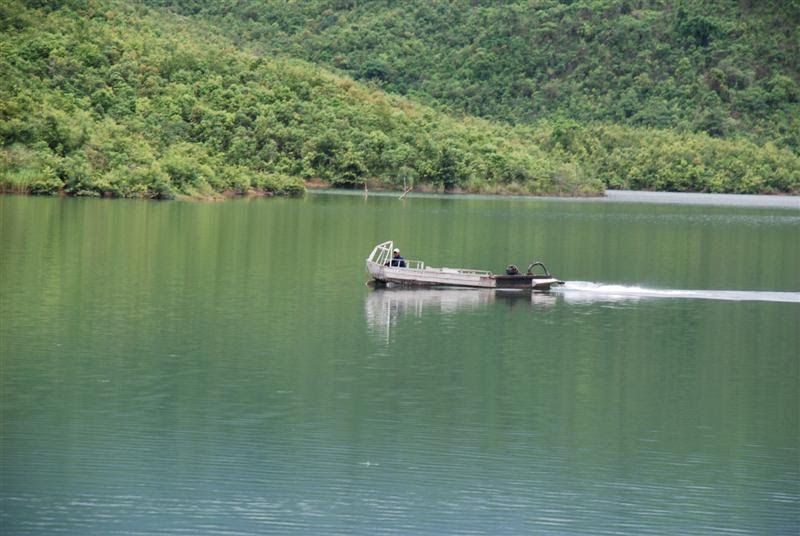
boating over khuga dam
khugadam

Khuga dam:  Built over Khuga River, located at Mata village near Churachandpur is one of the most beautiful artificial lakes of North-East India. It can be compared to Barapani Lake at Shilllong. The locals call it as "Mata Dam".
the dam remains a wanted site and the illuminated dam in the night is certainly a sight to watch.
ngaloi ngakik near mission compound

Ngaloi Falls : Located in Ngaloimoul village near Churachandpur. The falls are amazingly beautiful and a major tourist attraction. The scenic beauty and greenery around the falls is worth the visit. The low-lying mountains and water rushing down from the high hill top is absolutely wonderful. Visitors enjoy their visit to this fall and the cool breeze blowing from the cold water is so refreshing.
tonglon kawl


Tonglon caves: Located about 32 kilometers off Churachandpur is a must visit tourist place, The hills of Manipur have a number of mysterious caves. Of which Tonglon caves is one. The caves have unveiled a lot of historical and cultural facts about the state. The engravings, script and sculptures carved in the caves have greatly helped historians to understand ancient facts about Manipur.


Tribal Museum : Located a few yards west of the Churachandpur bus terminus along Thangzam Road, Hill Town at the heart of Churachandpur town, the 168.75 square metre sized museum, under the tutelage of the Zogam Art and Cultural Development Association (ZACDA) provides a chance to explore the insightful past tradition, cultures and relics of the tribal..
The museum has a large collection of tribal art and artefacts which have collected from different parts of the state and tell a lot about the people of this region. 

Lamka Bazar : Here, you can buy a whole lot of handicraft items that are made by dexterous hands of artists. Most of the antique pieces are vibrant and colorful. These form excellent souvenirs to be gifted to near and dear ones. A wide variety of tribal shawls is also available. 


And many more once you visit you will Know :D

Source tam lel e


Petition to PM of India

LETTER TO

Prime Minister of India
The President of India,
National Human Rights Commission, India
Ministry Of Tribal Affairs
Ministry of Law and Justice
Ministry of Minority Affairs
Government of India

Stop killing! Separate administration for tribals of Manipur.

On the 31st August, 2015, the Manipur Assembly passed 3 Bills namely the Protection of Manipur People Bill, 2015, The Manipur Shops and Establishments (Second Amendment) Bill, 2015 and the Manipur Land Revenue and Land Reforms (Seventh Amendment) Bill, 2015. The bills passed, identified as a direct threat to the very existence of the various ethnic communities in the state, are condemned and highly contested in the hill areas. The tribal populace and their representatives were not consulted in the whole process of adopting, drafting and passing of the aforementioned bills amounting to a clear violation of the constitutional safeguards of the tribals where it is mentioned that the tribes will solely have decisions pertaining to their land.

The Constitution of India in its Article 371C provides special provisions for Manipur. This Article provides the base for the formation of Hill Areas Committee - made up of 19 members elected to the State legislative Assembly from all the tribal areas - was envisaged to be the guardian of the tribal interests. The law dictates that the HAC must be consulted in all legislative matters affecting the hill area of the state. Further, the state governor must send the President annual reports on the administration of the hill areas, and the Central Government has the power to give direction to the state government regarding administration of these areas.

Various tribal organisations and institutions have made their voices heard, conveniently disregarded by the Ibobi led government led to wide scale protests in the hill districts. The protests and strikes are held continuously and have completed 16 days as of now. In bitter turn of events recently, the tribals who were persistently harassed, oppressed, exploited and neglected for decades, expressed their grievances through demonstrations which led to the death of 9 innocent civilians including a minor; mercilessly gunned down by the Manipur Commandoes sent from the valley districts.

The Manipur tribals were historically independent and were never a part of the Manipur, culturally or traditionally. The recent sleazy attempt by the Meiteis in collaboration with the Manipur Government to seize the lands of tribals and the inhumane treatments received time and over again are clear illustrations of the conditions of the tribals in the state.

Therefore, we take this opportunity and choose this platform to make our suppressed voices heard. In order to attain peace and restore normalcy in the tribal areas, we humbly request your honour to:
● Consider the rights of the tribals provided by the constitution of India and repeal the passed bills aforementioned.
● Issue an official CBI enquiry to the deaths of 9 innocent civilians.
● Arrange a separate administration for the tribals under the existing provisions in the Indian Constitution.


https://www.change.org/p/prime-minister-of-india-the-president-of-india-national-human-rights-commission-india-ministry-of-tribal-affairs-ministry-of-law-and-justice-ministry-of-minority-affairs-government-of-india-stop-killing-separate-administration-for-tribals-of?recruiter=387316960&utm_source=share_petition&utm_medium=twitter&utm_campaign=share_twitter_responsive

Land Rights of Tribal

Land Rights of Tribal and State Land Laws : Manipur
D P Panmei *

Introduction: 

The State of Manipur is divided into two regions viz. the hills and valley. Its physical area measures 22, 327 sq. km. of which the valley portion covers 2,248 sq. km. whereas hill areas cover 20,089 sq. km. The valley area is surrounded by hill and this central plain portion covers about 10% of the total geographical area of the State. The remaining 90% area is under hill regions. Different tribal communities occupy this hill region (P. Binodini Devi � Tribal Land System of Manipur). The central region of the State is inhabited by the general people Meiteis including Muslims and some tribals. 

There are about 37 tribal communities, out of which 33 had been specified as Scheduled Tribes under the Constitution of India. These different tribal communities occupy the hill region of the State and the region is divided into five revenue districts and the plain region has 4 (four) districts. The tribals' representation to the State population, according to 2001 census is 38.43%. This figure does not include the population of three TD Blocks because of some controversy in enumeration. 

The State Legislative Assembly has a strength of 60 M.L.A.s. 40 M.L.A.s represent 4 (four) valley districts of Imphal West, Imphal East, Thoubal and Bishnupur, where as 5 (five) hill districts of Churachandpur, Chandel, Ukhrul, Senapati and Tamenglong districts are represented by 20 M.L.A.s of which one is dereserved seat. 

Land holding pattern in tribal areas 

The tribals have their own system of land holding based on customary and traditional practices. The founder of the village took all risk and responsibility to establish a village and as such he earned the title 'Founder'. Later on he became the chief of the village and the first owner of the entire village territory in respect of the Naga tribals. He had parceled out the territory from the vast area after proper or due rites performance and appeased the spirits of evil world in and around the area. 

They got and occupied the land from the powers of unseen forces as they believed. They claimed absolute authority over their land. Tribals considered that the land they possessed and occupied are out of their merit. Interference to their land is therefore, opposed with tooth and nail. They are the first settler of the land. Every tribal village was independent republic without outside interference. 

Land ownership 

Tribals claimed absolute ownership over their land. The one who established the village is the first owner in Naga society. There was two to three tier system of ownership among some Naga tribes. The first owner i.e. the founder of the village had to dole out some portion of land to any of his villagers in exchange of animals like dog, pig, mithun, rice-beer, for use in his ritual performance. The one who could offer his domesticated animals, food and other goods against a piece of land etc. become the owner of that portion of land. That person becomes the second owner. 

There were some chiefs who liberally shared the land on clan basis. The third owner was the one who claimed the cultivating plots within the portion of land given to the second owner by the chief or founder. He may get it by paying a price or by barter. In this way the existence of the third owner came into Naga society. There may be some minor variations in the system even among the Naga tribals. Those villages whose cultivation is of jhuming or shifting practice do have second and third ownership system. Even in the village where settled or terrace cultivation is practiced, the same system exist. So Naga society has at least two tier system of land ownership, the first being the founder of chief and the second owner is that of cultivating plot. 

As regard to Kuki system of land ownership, the chief is all in all. He is the supreme authority in the village affairs. He owns the entire land within his jurisdiction. There is neither clan land nor individual. It is unlikely of the Naga system. He distributes land for cultivation and plot for dwelling house construction. The Kuki chief has the authority to expel any villager from the village. Villagers live at the pleasure of the chief. The Kuki administration is autocratic and the chief is the autocrat. 

The tribals as a whole have their own time tested land holding system based on traditional practices by which they are governed. They consider that the lands they possess are acquired from the nature. As such the tribals do not have any land laws except that of traditional and customary base practices. 

Before application of any land law in Manipur, the Raja of Manipur claimed absolute ownership of all lands within his territory i.e. the valley area from the earliest time and collect land revenue. On the other hand, during the British period, the administration of the entire hill area of Manipur State was under the responsibility of the President of Manipur State Durbar who was a British ICS officer. 

The hill areas were separately administered as per a set of rules known as Hill Peoples' Regulation Act. The hill areas were at no point of time under the administration of the Raja of Manipur. The administration was carried on to the tune of the Hill Peoples' aspirations and their age old traditional practices. While such was the considered administration for hill/tribal people, a land act was enacted in 1960, which had rather frightened the tribals with the land being alienated from them. 

The Manipur Land Revenue & Land Reform Act, 1960 (MLR & LR Act, 1960) 

The Manipur Land Revenue & Land Reform Act, 1960 (MLR & LR Act, 1960) was enacted by the Parliament to consolidate and amend the law relating to land revenue in the State of Manipur and to provide certain measures of land reform. Before the enactment of the State land laws, the Assam Land & Revenue Regulation Act, 1886 was applied to Manipur by a State Durbar Resolution. 

The MLR & LR Act, 1960 intends to bring about uniformity in distribution of land throughout the State. However, Section 2 of the Act says, "It extends to the whole of the State of Manipur except the hill areas thereof". Thus the Act did not apply to the hill areas of the State. Under the Act, hill districts do not automatically mean hill areas. They Act assigned a special meaning to it. According to Section 2(1) of the Act, hill area means such areas in the hill tracts of the State of Manipur as the State Government by notification in the official Gazette declared to be hill areas. The State Government under different notifications Nos. had notified 1161 villages as hill areas in the 5 (five) Hill Districts for the purpose of this Act. 

Though Section 2, of the Act says that if does not apply to the hill areas of the State, it again says, "Provided that the State Government may, by notification in the official Gazette, extend the whole or part or any section of this Act to any hill areas of Manipur also as may be specified in such notification". The provisions for protection of the tribals had been curtailed off. The State Government under different notification Nos. had extended the provision of the Act to tribal areas. To the tribals, the extension of the Act to their areas is encroachment into their territory. The tussle between the State Government and the tribal chiefs, civil organizations etc. possess a grave situation. So far 89 villages of Churachandpur district and 14 villages each of Tamenglong and Senapati districts had also been covered by the Act (P. Binodini Devi � Tribal Land System of Manipur). 

There is a special protective provision of the Act on the transfer of land belonging to a tribal to non-tribal. Section 158 says, "No transfer of land by a person who is a member of Scheduled tribes shall be valid unless � 

The transfer is to another member of Schedule tribes; or 

Where the transfer is to another person who is not a member of any such tribes, it is made with the previous permission in writing of Deputy Commissioner provided that the Deputy Commissioner shall not give such permission unless he has secured the consent thereto of the District Council within whose jurisdiction the land lies; or 

The transfer is by way of mortgage to a co-operative society. 

The State Government had made an exceptional provision of the Act to the restriction of land transfer. This is the fear of the tribal population i.e. if the transfer is made by way of mortgage to a co-operative society, the consent of the District Council and written permission of the Deputy Commissioner is not required. This provision is a grave threat to the innocent tribals.


 D P Panmei wrote this article for The Sangai Express 
The writer is a Retd. Joint Director of Tribal Research Institute, Govt of Manipur 
This article was  Webcastedon January 10, 2010. 

MANIPUR BURNING : LAMKA ON FIRE

Lamka, August 31: A mob agitated over the passing of three bills that have infringed upon the rights of the state tribals, has tonight ransacked and set fire several properties of at least five MLAs from the district.
The mob that sprouts following a bout of alarm bells initially attacked the residence of health minister Phungzathang Tonsing located at New Lamka around 6pm. They ransacked the house and set aflame several furnitures. The fire is said to have caught the concrete structure by 7 pm as water tankers and fire tenders and the Police that had rushed to the spot were attacked and forced to withdraw.
Several of the mob then moves towards the residence of Thanlon MLA Vungzagin Valte also located at New Lamka wherein they set ablaze the security

sentry post and a vehicle.
The Deputy Commissioner Lunminthang Haokip, who has rushed towards the minister’s residence was also attacked. His official vehicle along with that of his escort’ was vandalised and overturned at Damkam Bazar.
The mob also attacked the residences of Singngat MLA Ginsuanhau Zou at Lailam Veng and that of Henglep MLA T Manga Vaiphei located at Hill Town.
The residence of TN Haokip located at Tuibuong was also burnt down by an irate mob around 7pm tonight.
Exact extend of damage caused in tonight’s mob fury was still difficult to comprehend as the situation is still simmering and the mob that had expanded across the township was still violent.
Manipur Police Commandos from Bishenpur have reached Lamka and started indiscriminate firing on the civilians with utter disregard for the life and property of the tribals. At least two persons have been killed and more than 20 have been injured. The ruthless killings speak volumes about the anti tribal attitude of security personnel which mainly comprises of Meiteis, who appear to be hellbent on what is an apparent manhunt for any tribal. Full display of the powers of the AFSPA in progress!
The state tribal population was against the bill, that is said to regulate outsiders but also scheme to discreetly remove the law that bars majority meitei community from owning tribal land, as they consider the bill nothing but an attempt to annihilate the rights they enjoy over their traditional land.
[LamkaHuihkhi]